Showing posts with label teaching. Show all posts

Saturday, September 8, 2012

Teaching about 9/11

A colleague reminded me recently of the importance of teaching about 9/11.  Shamefully, I have shied away from it for two reasons.  First, my students were infants when the event occurred.  Second, I simply did not know how to approach such an emotional event.  After my colleague shared how she was going to acknowledge the day, I was inspired to develop a responsible and sensitive approach for my classroom too.

This September 11th, we will focus on the important American values of service and volunteerism.  I have prepared a brief information sheet for students titled, "What happened on September 11th?" adapted from 911memorial.org.  Students will read this together and will then watch A Timeline of 9/11 (5-minute video from history.com).  These two resources will help them to understand what actually happened that day.

Students will then view Spirit of Volunteerism: 9/11 and Beyond (7-minute video, 911memorial.org).  Last, I will have the students engage in an activity described in the Spirit of Volunteerism: 9/11 and Beyond video teaching guide.  Students will select one of 5 quotes from the video that best expresses their reactions to the film.  I will have them rewrite the quote on a poster sheet and then write why the quote is meaningful to them and how it describes the ideas of service and volunteerism.  Here are the quotes from the video:

Ground Zero worker: 
“Don’t ever forget these days, boys. We came in as individuals. And we’ll walk out together.”

Samuel Johnson:
“Great works are performed not by strength, but perseverance.”

Mother Teresa:
“We ourselves feel that what we are doing is just a drop in the ocean. But the ocean would be less because of that missing drop.”

Winston Churchill:
“You make a living by what you get. You make a life by what you give.”

Mahatma Gandhi: 
“You must be the change you want to see in the world.”

With this plan, I am now much more confident about how to approach 9/11 in my classroom.  Thanks to my colleague for her encouragement!


Lessonplan:

Alyssa Hinkell-Moore
7th Grade Social Studies 
Ancient Civilizations of the Mediterranean Sea 

Unit: First Weeks of School Lesson Title:   Patriot Day, A Day of Service Class Period: 1

NCSS Standard (what we are learning):  Civic Ideals and Practices - j. recognize and interpret how the “common good” can be strengthened through various forms of citizen action.

Common Core Standard (how we are learning):  WHST.6-8.10. Write routinely over extended time frames (time for reflection and revision) and shorter time frames (a single sitting or a day or two) for a range of discipline-specific tasks, purposes, and audiences.

Learning Target/ObjectiveI can describe the purpose of Patriot Day as a remembrance of 9/11 and reflect on the idea of service

Essential Question:  What is service?

Vocabulary:
Tier 2
service 
volunteerism

Student Activities:

Day 1 
  1. Review objective and essential question
  2. Explain that September 11th is known as Patriot Day and is a National Day of Service and Remembrance
  3. Read “What happened on 9-11?” student information sheet
  4. “Timeline of 9/11” video, 4:54 (http://www.history.com/videos/911-timeline#911-timeline)
  5. Watch “Spirit of Volunteerism: 9/11 and Beyond” video, 6:50 (http://www.911memorial.org/inspired-make-difference-after-911-0)
  6. Discuss video:
  • Highlights from the film
  • Whom would you like to meet from the film and why?   
        7.  Student writing activity: Select a service-themed quote, reflect, and respond 

Diagnostic and Formative Assessments (Checking for Understanding):
  1. Student reflections (F)


Student Sheet:

Patriot Day, September 11th 
A National Day of Service and Remembrance

What Happened on 9/11?

On September 11th, 2001, nineteen al Qaeda terrorists hijacked four airplanes, intending to strike 2 buildings of the World Trade Center in New York City and 2 targets in Washington, D.C. Hijackers crashed American Airlines Flight 11, carrying 87 passengers and crew, into the North Tower of the World Trade Center.  United Airlines Flight 175, carrying 60 passengers and crew, crashed into the South Tower of the World Trade Center.  Hijackers also deliberately crashed American Airlines Flight 77, carrying 59 passengers and crew,  into the Pentagon near Washington, D.C. After learning of the other attacks through cell phone calls, passengers on United Airlines Flight 93, carrying 40 passengers and crew, launched a counter-attack on the hijackers to seize control of their plane. As a result of their brave actions, Flight 93 crashed into an empty field in western Pennsylvania, instead of the hijackers’ intended target of the nation’s capital, Washington, D.C. 

In New York City and Washington, D.C., thousands of people evacuated safely. Tragically, nearly 3,000 lives were lost – the largest loss of life from a hostile attack by a foreign group on American soil. The attacks triggered immediate rescue and recovery operations at all three sites. Afterwards, donations of money and supplies poured in and people came from all over the world to volunteer their help. Memorials and vigils were held in New York City, Washington, D.C., Pennsylvania, and all over the world. While the World Trade Center site in New York City and the destruction at the other crash sites are reminders of loss, the generosity and service in response to the attacks shows the triumph and bravery of the human spirit. 
-Adapted from 911Memorial.org

Student Activity

Directions:  After viewing the “Spirit of Volunteerism: 9/11 and Beyond” video, please select one of the quotes below that best expresses your reactions as you watched the film.  Rewrite the quote on the poster sheet provided (be sure to include who the quote is by).  Then, write why the quote is meaningful to you and how it describes the ideas of service and volunteerism.  

Ground Zero worker: 
“Don’t ever forget these days, boys. We came in as individuals. And we’ll walk out together.”

Samuel Johnson:
“Great works are performed not by strength, but perseverance.”

Mother Teresa:
“We ourselves feel that what we are doing is just a drop in the ocean. But the ocean would be less because of that missing drop.”

Winston Churchill:
“You make a living by what you get. You make a life by what you give.”

Mahatma Gandhi: 
“You must be the change you want to see in the world.”


Wednesday, August 22, 2012

Classroom Set-Up, Part 2 / Before and After

So any of you teachers out there (or friends and family members of a teacher) know how much planning, effort, and funds go into setting up a classroom.  I wrote about some of the most important things I think go into planning a classroom in a previous post.  Tonight I am sharing my before and after photos.  I know this is really dorky, but I actually love looking at other classrooms to get ideas so I thought sharing mine might help others.  Also, finishing my classroom has definitely gotten me into the right mindset.  Honestly, even at the beginning of this week I was not feeling good about the upcoming school year.  Thankfully, after finishing my room, finalizing plans for the first two weeks of school, and looking over the names on my class lists, I feel ready.  Though it is sort of hard to explain, I feel much the same way I did at the start of my various school years when I was a kid.  Pencils sharpened, new outfits picked out, butterflies swarming, excitement over what I was going to learn, curiosity about my new teachers, anticipating the new books I was going to be able to read.  Now, as a teacher I feel a very similar blend of hope, nervousness, and excitement.  I am especially hopeful for the school year as I read all of the names of my new students.  I mean, let's face it- we teach because we love working with kids.  I know virtually nothing about these kids except that they will expect LOTS from me over the course of a school year, as I will from them.  Each year, I give myself a little pep talk.  I need to be the best possible teacher, every day, every moment because my kids are counting on me.  Moments count in classrooms and even the smallest decisions I make can have an impact on a child.  And, though posters and bulletin boards may seem trivial, these visuals set the tone.  A child can size up what their experience is going to be like as soon as they walk in a room.  

Yup, I am definitely ready for them now.

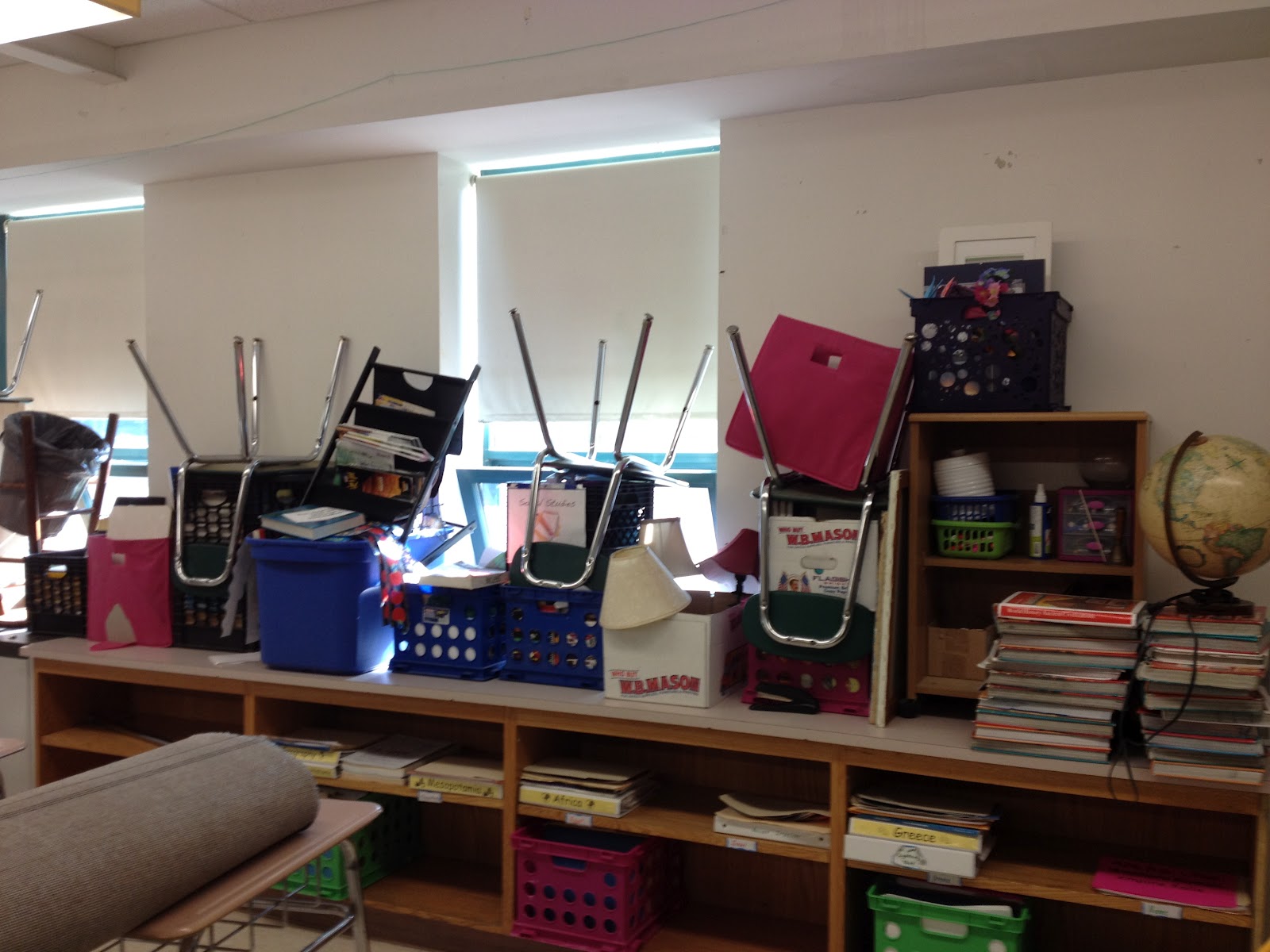
Before- chaos

After- Word Wall


Before- yucky wall

After- Student Work Display Wall


Before- blank front of room

After- Almost done


After- Reading and Writing in Social Studies Resource Wall (will be adding to this)


Before-  back corner, no purpose

After-  Much better!  (especially with my mini-fridge)


Tackling a classroom at the beginning of a school year is a big job so I am going to stay away from school and enjoy my last few days of summer.

We made a lovely wheat bread today- more on that tomorrow!

Friday, August 17, 2012

New Teacher Welcome Kit

As we count down the days to the beginning of the school year, some of you may be serving as mentors for new or first year teachers.  I have served as a mentor for the last few years and am very excited about my protege for this year as she served as a paraprofessional on our Team last year and is going to be a fabulous teacher!!  I have put together a kit to welcome her to her official position as a full-time teacher.  I have seen different versions of a new teacher welcome kit online, but like the version I put together because the items are cute and useful.  (Some have items that are cute-sy, but that serve no real purpose.)  I think this is a great way to welcome a protege or colleague to our profession!

Here is the text of the sheet I put in the kit:


Welcome to Teacherhood, _________ !!

Here is your “Just-in-Case” kit (not that you will need any of it)!  In your kit, you will find...

~ “all smiles” stickers because, as you know, there are students who will cause you to be all smiles.
~ hand sanitizer and hand wipes because schools are wicked germ-ey.
~ a red sox PEZ because you may need to pop a few here and there.
~ some chocolate bars because...well do I really need to explain this one?
~ a cup o’ noodles because one day you are going to forget your lunch and miss your carefree college years.
~ animal crackers because a snack at the end of the day is always necessary (and it is a bit of a zoo here sometimes).
~ a first aid kit because some students think “gaping wound” is synonymous with “little scratch”.
~ extra pencils and pens because you are going to need them when you lend all of yours to the kids.
~ body fragrance because teenagers + P.E. = enough said. 
~ Hairspray and deodorant even though you always look and smell fabulous.
~ Colgate wisps and Scope to avoid the dreaded teacher coffee breath.
~ a mini sewing kit to save you or a student from a “wardrobe malfunction”.
~ highlighters because it is important to remember the high points of every day.
~ a nail kit because sometimes your regular manicure won’t come soon enough.
~ a lint remover because you won’t be able to see dog hair on your clothes when you are getting ready at the crack of dawn. 
~ a personal pack of kleenex because the kids will blow (literally) through a box in one class period.
 ~ Off! insect wipes because someday a student (or colleague!) is really going to “bug” you.
~ note tabs and a tupperware box because teachers need to stay super organized.
~ a Tide to go stick because our lunch ends up lasting about 11 minutes.
~ sparkly nail polish because some days are going to need a little more sparkle.
~ and finally, a few squawkers because every day is a party around here!


Here are some pics of my kit:


Friday, August 3, 2012

Classroom Set-Up, Part 1

First off, there is a bakery/pastry shop opening up 25 paces from my front door.  I am secretly hoping it is horrible.  Obvie.

So this post is going to be a teacher post.  Feel free to stop reading if you are not a teacher.  Or, if you are not a teacher, keep reading if you want to know what truly goes into setting up a classroom.

Ahhh August.  It arrives every year and brings with it lots of anticipation about the upcoming school year.  Typically, I begin having first day of school dreams around this time (this year they started a few weeks ago which is quite early- gasp!).  Sometimes my dreams are really bad.  You know, the kids aren't listening to me at all, I have somehow forgotten to prepare any sort of opening day activity, I oversleep and show up with rats nest hair and disheveled clothing, or a student splashes mud in my face while a friend records it and then they post in the internet. Totally normal dreams to be having- I swear.  Some dreams have a sweeter tone.  Students are eagerly working on the activities I work so hard to plan and there are respectful interactions between all members of the classroom community.  Such dreams, both the former and the latter, motivate me to carefully plan out my classroom.  Some of you may not know what goes into planning a classroom for the arrival of the students.  It is not just about putting up a colorful bulletin board and taping some motivational posters featuring cute polar bears to the wall.  It is about imaging the space running productively with two (sometimes three) adults in the room along with the real inhabitants that can make it shine- the 25+ students who call that space "home" for 62-minutes a day.  In order to plan a classroom effectively, us teachers have to get into the minds of our students and transport ourselves to our best and worst days of the previous school year to either identify what went right or what went wrong with those class periods.  (Sometimes, we have control over this :) )  I would suggest actually drawing out a plan in pencil before you shop for your classroom and even step foot in it.  (This was my first plan, but I had to make some updates after spending some time in my classroom yesterday.)


To plan our classroom space, we have to consider such questions as the following:


1.  If I am a typical self-conscious middle school student, in what seating arrangement am I going to feel most comfortable?  I know lots of experts love the U-shaped format for student desks, but a lot of students are going to feel very exposed in this formation.  Some students are going to be more focused on what they look like to the cute student across the room who they have a crush on (this week) than what we are learning about.  Rows?  Simply do not work in most spaces.  They do not lend themselves to collaboration or discussion between students and, at least in my room, make it difficult to move around.  I typically arrange my desks in tables of 4 and arrange these "tables" in a way so that each student is facing either the windows or the opposite side of the room.  In other words, each student needs to turn to the left or the right to face the front board, but no one has their back to the front either.  What other formations do people find successful?


2.  Where can I store student supplies so that they are accessible, but not in a distracting location?  This is a BIGGIE.  We need to put our supplies in a place that students can easily and comfortably get to, but not too easily or comfortably.  You do not want a student getting up in the middle of you going over the agenda to sharpen his pencil (efficient pencil sharpening is a post of its own as most educators know).  You also do not want a student to have to squeeze behind the desks of others to get a highlighter.  Be sure that supplies are in a location that works for the types of activities you typically do in your classroom.  (My suggestion in the next section might help.)


3.  How am I going to organize student supplies to maximize time on learning?  This is where some non-teachers are going to pause and be like, "Aren't we over-thinking this a bit?"  and most teachers will exclaim, "No!" (if we could actually hear each other :) )  I have tried a few systems for materials.  First, I have tried the one kit per table group method.  When supplies are needed I will have the person from each group whose name comes first in the alphabet, the person whose birthday is next, or something of the like go and get the group's supply kit.  Each "kit" might contain glue sticks, markers, colored pencils, crayons, highlighters, scissors, sticky notes, rulers, and maybe a little surprise based on what we are doing that day (packages of "smarties" if we are having a quiz, bookmarks if we are reading a novel, etc.)  This method only works until June if you develop a system holding each group responsible for the materials in their kit.  If you assign the same kit to the same group each day than you can always narrow it down to 4 kids if you are missing a blue colored pencil after period 2.  You could also start the year with a checklist of what needs to be in the kit at the end of the class period and you can physically have one student check the items off while the other members of the group hold the items up.  It seems like a lot of work but when you invest this time upfront you are more likely to not be left with only brown crayons, yellow and orange colored pencils, and some broken rulers at the end of the year.  A second method is to have a bin for each type of material.  This way, if you are using scissors and glue that day but not coloring utensil you can instruct one member of the group to go obtain those materials.  I have tried this method and personally do not like it because a. my students are 7th graders and some of them are mature enough to know what materials they are going to need to execute a specific task, b. I do not have enough supplies for each member of the class, and 3. sometimes most of the time students take a really long time to get those supplies which causes a line.


4.  Where am I going to display student work to celebrate strong effort?  Admittedly, I did not plan a good space for such displays last year and, as you would expect, I did not do a great job of regularly displaying student work.  This year, I have a plan in place.  Student work is going to be displayed across from my main door and to the right of a secondary door (both doors are used each day).  This way, excellent work is in the direct line of their vision.  I would venture to say that 99%  of students enjoy seeing their work on display when they know they put good effort into it.  This year, I have a banner that reads, "Good Work Grows Here" (Dollar Tree purchase).  Underneath it I am going to attach a tree made out of brown shopping bags.  One of the first homework assignments this year asks student to trace their hand, write in important information about themselves, and then cut it out.  I will then attach these hands as the "leaves" of the trees.  (Access this homework assignment here.) Strong work will be displayed around this tree with the assignment description and rubric attached.  I once read that it is important to change classroom displays (or even rearrange them) every few weeks.  After this point they lose their impact and become part of the landscape.  This means, that I should probably put new assignments up each time I collect and grade interactive notebooks.  (More on the use of interactive notebooks in another post.)

5.  How am I going to effectively use wall space to maximize learning?  Last year, I had a lot going on when it comes to the walls of my classroom.  I had moved into a new classroom and the walls were very dirty.  (Footprints on the wall 6 feet off the floor?  What in the world...?)  I decided to cover up this yuckiness with lots of maps.  Visually I thought it looked great until I started to think about it from the perspectives of some of my students.  For a student with attention issues this was probably very overwhelming.  This year, I am going to make sure that each section is devoted to one specific purpose:
1. Displaying student work as I mentioned in #4
2. Word wall
3. Reading tips and information
4. Writing tips and information
5. Information like upcoming events, lunch menus, team birthdays, etc.  (outside bulletin board)
6. Information like daily agenda, homework, objectives and standards
7. Geography skills
This way, if a student needs assistance with vocabulary I can point them to one specific location (word wall).

Hmmm, that was a lot of information.  Some of it probably obvious to some of you, some of it hopefully new and helpful.  What other tips do people have for planning and organizing a (hopefully) effective classroom?

Since this is Part 1, I will be sure to post Part 2 with before and after pictures in the next few weeks.  (Not next week though because my husband and I are leaving for our HONEYMOON tonight!!!  Sweet vacation time!)

Wednesday, August 1, 2012

Welcome.

My husband often remarks on the fact that I love a good plan.  He is right.  I love a good plan.  Whether it be planning our honeymoon, planning a vintage dish rental company (which never came to fruition), planning the layout of my classroom (I am a middle school teacher and yes, I love my summers off), or planning our weekly meals, I love to plan.  I like considering the "big picture", determining what tasks need to be accomplished towards that end, figuring out a logical order for such tasks, and making lists to ensure they get done.  I know this makes me sound like a type-A control freak, but I am not.  Well, at least that's not all I am.  Because I am a concrete sequential and abstract sequential blend, I am drawn to ordered, sequential, linear ideas while also appreciating the role of feelings, emotions, and intuition in the planning process.

This blog is a way for me to share my plans, for better or for worse.  My shared plans will include those about sewing, crafting, cooking, and teaching. 99% of these plans are first written into a little pink notebook that I have with me 99% of the time.  (The other 1% of my plans are developed in my head and are therefore, rarely successful.  The other 1% of the time I do not have my notebook with me, the plans get forgotten.  I need to write my ideas out to help them along.)  Each post will represent a different page in this notebook.  I hope you enjoy your glimpses into my pink notebook planning!